
Blog
Commercial Energy Storage for African Hotels, Hospitals, and Factories: Project Cost and Configuration Analysis

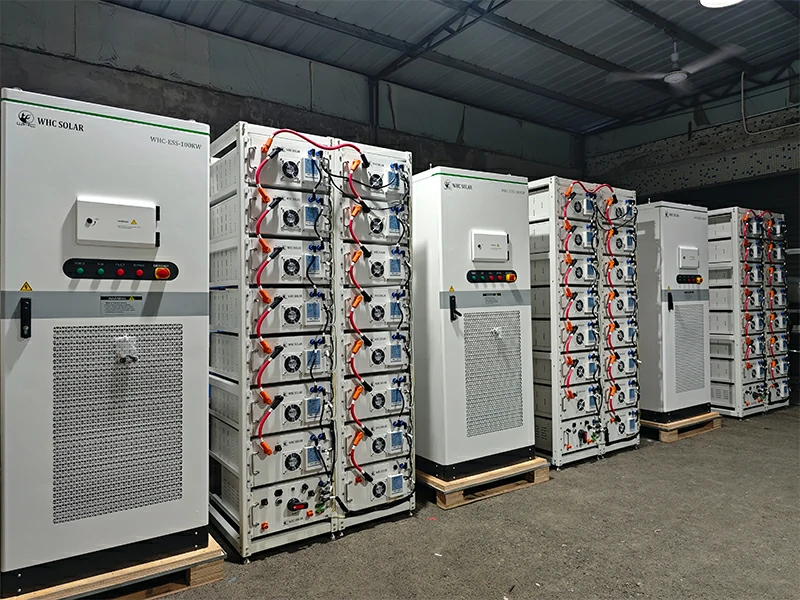
For African hotels, hospitals, factories, mines, schools, and project contractors, commercial energy storage is no longer only a backup option. It is becoming a practical way to reduce diesel generator runtime, stabilize power supply, protect critical loads, and make solar energy more useful during evening and night operations.
Across West Africa, Central Africa, and Sub-Saharan Africa, many business sites face weak grid supply, voltage fluctuation, expensive diesel fuel, and long power outages. The IEA Africa Energy Outlook reports that hundreds of millions of people in Africa still lack electricity access, and that mini-grids and stand-alone solar-based systems remain important options in rural areas. For business owners, this is not only an energy access issue. It is a revenue, safety, and operating continuity issue.
This article explains how African project owners and EPC contractors can evaluate a commercial energy storage system, estimate the right configuration direction, compare project value, and avoid common procurement mistakes before ordering equipment for 100kW and above C&I projects.
Why Commercial Energy Storage Matters for African Business Sites
A small home solar kit can run lights, fans, and phone charging. A commercial or industrial site is different. A hotel may need air conditioning, kitchen equipment, water pumps, lighting, cold rooms, and guest room power. A hospital may need stable backup for laboratory equipment, refrigerators, operating rooms, communication systems, and water supply. A factory may need motors, compressors, production lines, security systems, and office power.
For these users, a power failure can create direct financial loss. It can stop production, damage stored goods, reduce customer trust, or increase diesel generator costs. A well-designed commercial solar energy storage system can reduce these risks by combining solar PV, battery storage, inverter control, and optional diesel generator integration.
The World Bank’s Tracking SDG 7 report notes that decentralized renewable energy solutions provided a large share of new electricity connections in Sub-Saharan Africa from 2020 to 2022. For C&I buyers, the same direction is visible at project level: more companies want flexible solar and storage systems that can work where the grid is weak or expensive.
Typical Commercial Energy Storage Applications in Africa
Before asking for a quotation, buyers should define the site type and the real power problem. In our view, African C&I storage projects usually fall into five practical groups.
| Project Type | Main Power Need | Storage Value | Buyer Should Check |
|---|---|---|---|
| Hotel or resort | Guest rooms, pumps, air conditioning, lighting, kitchen loads | Reduce generator runtime and improve guest experience | Evening load, peak load, backup duration |
| Hospital or clinic | Medical equipment, refrigeration, lighting, water supply | Protect critical loads during grid failure | Critical load separation and transfer time |
| Factory or workshop | Motors, machines, compressors, office power | Avoid downtime and reduce diesel cost | Starting current, three-phase balance, surge load |
| Mine or remote site | Remote power, fuel logistics, communication, safety systems | Reduce fuel transport and improve site reliability | Hybrid diesel integration and site maintenance ability |
| School or public facility | Classrooms, computers, pumps, lighting, administration | Support daytime operation and evening backup | Budget limit, simple operation, local service |
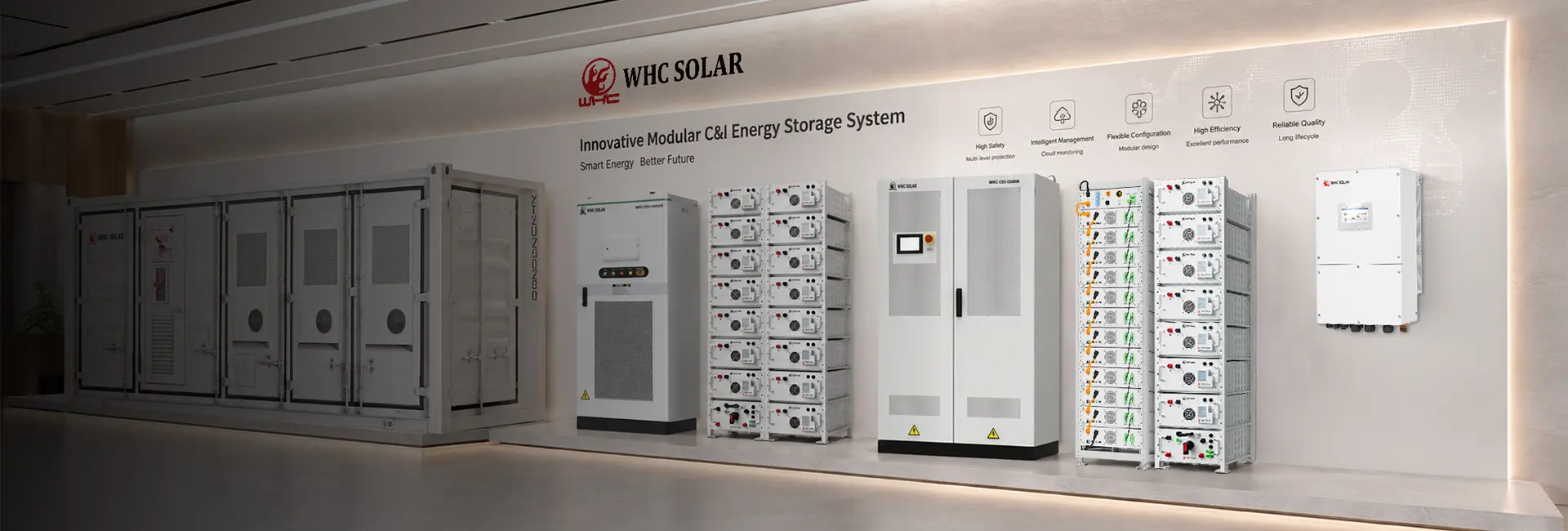
For WHC Power, these applications are the core direction of the site. Buyers can review commercial and industrial energy storage systems when they need a complete solar storage solution for large business or project loads.
How to Estimate System Size Before Asking for a Quote
A serious C&I energy storage system quotation cannot be based only on a simple statement such as “I need 100kW.” A 100kW inverter and a 100kWh battery are not the same project. The inverter decides how much power the system can supply at one moment. The battery decides how long the site can run when solar or grid power is not enough.
For African commercial projects, WHC Power normally recommends buyers prepare four pieces of information before requesting configuration support: peak load, daily energy consumption, required backup hours, and whether the system needs grid, solar, and diesel generator coordination.
| Configuration Item | Why It Matters | Information Buyer Should Provide |
|---|---|---|
| Peak power | Determines inverter capacity and overload design | Maximum running load and large motor starting demand |
| Daily energy use | Determines solar array and battery capacity | kWh per day from bills, meter data, or load list |
| Backup duration | Determines useful battery capacity during outage | Required backup hours for critical and non-critical loads |
| Operating mode | Affects PCS/inverter logic, EMS control, and generator coordination | Grid-tied, off-grid, hybrid grid-diesel, or solar-diesel-storage mode |
As a practical starting point, a 100kW and above project should be treated as an engineering configuration, not a retail product order. A hotel with 100kW peak load and 4 backup hours may need a different battery capacity from a factory with the same peak load but heavy motor startup and longer evening operation.
Cost Logic: What Buyers Should Compare Beyond Product Price
Many buyers first ask for the lowest equipment price. That is understandable, but it can be risky. In commercial projects, the cheapest quotation may become expensive if the system is undersized, difficult to install, incompatible with the local grid, or unsupported after delivery.
IRENA’s Renewable Power Generation Costs in 2023 shows that solar PV and battery storage costs have fallen significantly over the long term. For African buyers, this improves the business case for solar plus storage. However, project value still depends on correct sizing, real load data, and the ability to reduce diesel runtime or grid power cost.
In our experience, the better comparison is not “which supplier is cheapest,” but “which supplier can reduce project risk and total operating cost.” A reliable solar battery energy storage system should be evaluated by configuration accuracy, component matching, installation support, warranty clarity, spare parts, and after-sales response.
| Comparison Point | Low-Quality Procurement Risk | Better B2B Evaluation Method |
|---|---|---|
| Inverter capacity | System trips when load rises or motors start | Check peak load, surge capacity, and phase balance |
| Battery capacity | Backup time is shorter than expected | Calculate usable kWh, DOD, and critical load duration |
| System integration | Battery, inverter, and control logic do not match | Confirm BMS, EMS, PCS, and protection design before order |
| Installation support | Local team cannot complete commissioning smoothly | Ask for wiring diagrams, configuration notes, and remote guidance |
Recommended System Thinking for 100kW and Above Projects
For a 100kW and above industrial energy storage system, the project should be planned around load hierarchy. Not every load needs the same backup priority. A hospital may separate critical medical equipment from normal lighting. A hotel may separate guest room backup from kitchen or laundry loads. A factory may separate office power from production equipment.
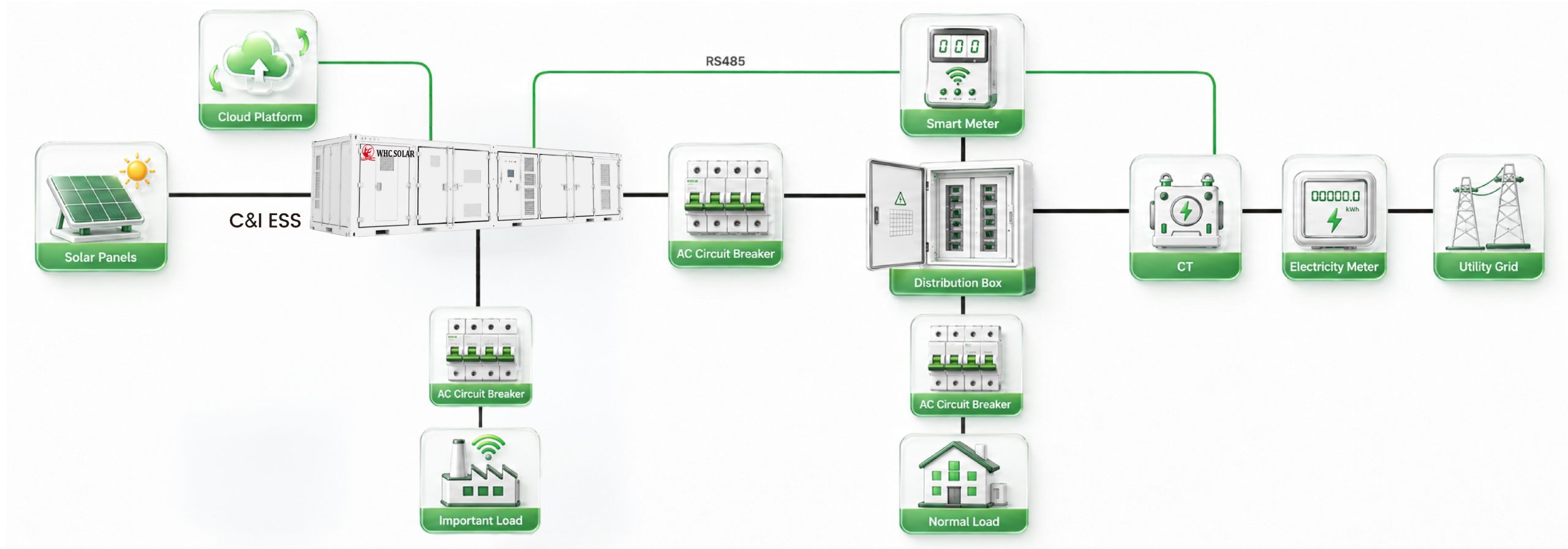
This load separation helps reduce unnecessary battery cost. It also improves system reliability because the storage system supports the most important loads first. For large sites, buyers should also decide whether the system will work as solar plus battery only, grid plus solar plus battery, or solar plus battery plus diesel generator.
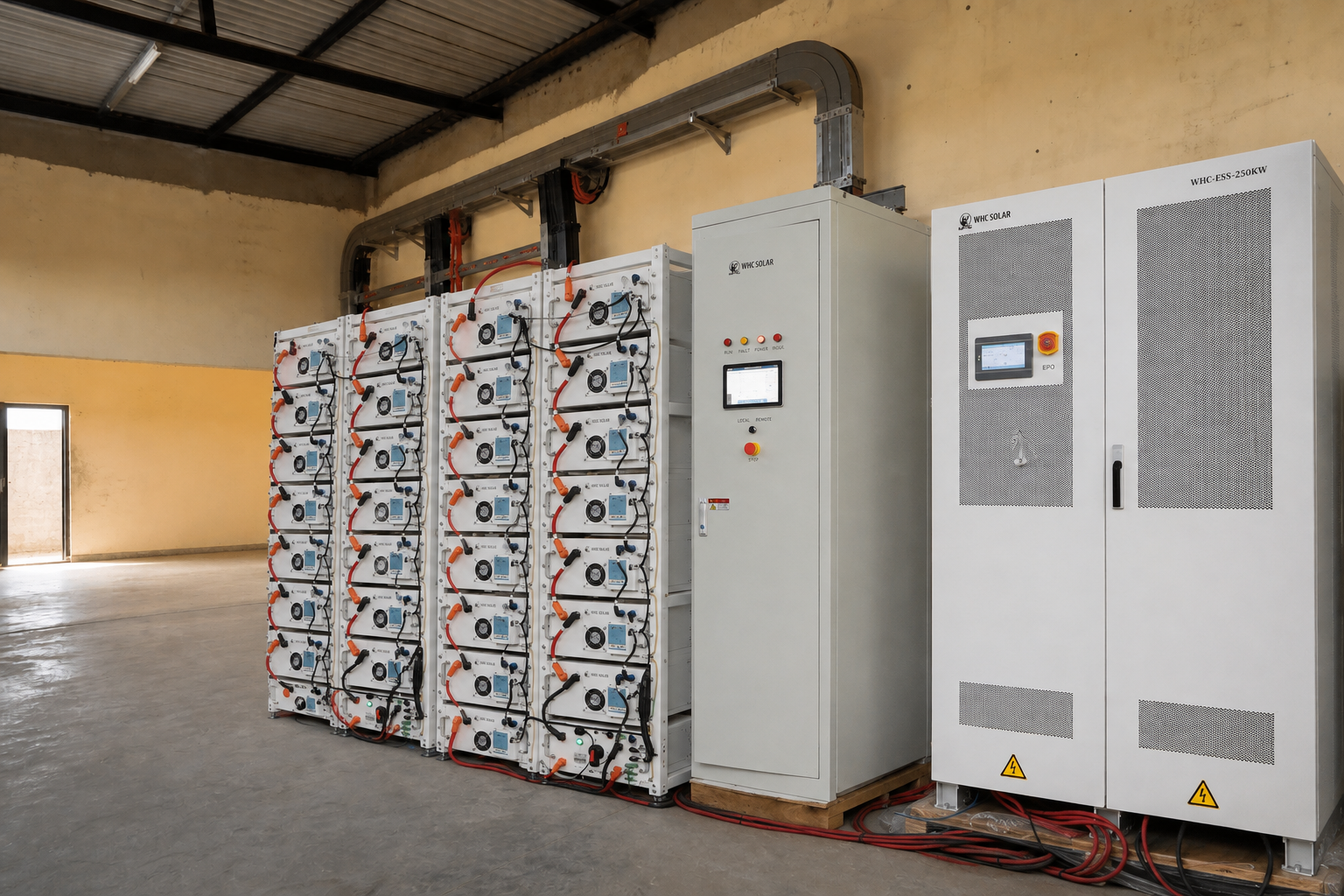
For project owners who need a complete solution, WHC Power can support 100kW class commercial energy storage projects with solar PV, storage inverter, battery cabinet, system protection, and configuration support. The final design should always be based on real load data and project operating hours.

Common Mistakes When Buying Commercial Energy Storage Systems
The first mistake is buying a fixed package before checking the load profile. A package may look attractive, but it can fail if the site has large pumps, compressors, elevators, or three-phase motor loads.
Another mistake is comparing only battery capacity. A larger battery does not solve poor inverter sizing, weak protection design, or wrong operating mode. The system must be reviewed as a complete power solution.
Buyers also sometimes ignore local maintenance. In remote African projects, a system that requires complicated service but has no local support plan can create long downtime. This is why spare parts, remote support, installation documents, and simple operation logic matter.
The final mistake is treating diesel generators as the enemy. In many African C&I projects, the best solution may be solar plus storage plus diesel generator coordination. The goal is not always to remove diesel immediately. Often, the stronger business case is to reduce generator runtime, fuel consumption, maintenance cost, and noise while keeping backup security.
How WHC Power Supports African C&I Energy Storage Projects
WHC Power focuses on solar commercial and industrial energy storage system applications. For African EPC contractors, the value is project configuration support, product matching, and delivery coordination. For business owners, the value is a practical system that can protect daily operation and reduce long-term power risk.
Instead of selling only separate products, WHC Power supports buyers with system thinking: PV array direction, inverter capacity, battery capacity, control logic, protection design, and application scenario matching. Buyers can also contact WHC Power through the project configuration request page to discuss hotel, hospital, factory, mine, school, and commercial building projects.
Conclusion
Commercial energy storage can help African hotels, hospitals, factories, mines, schools, and public facilities reduce diesel dependence, improve power continuity, and build more resilient solar energy systems. The key is not only buying batteries or inverters. The key is matching system capacity, backup duration, load type, operating mode, and supplier support.
For 100kW and above projects, buyers should prepare load data, backup requirements, grid conditions, diesel generator information, and site application details before asking for a quotation. This makes the final proposal more accurate and reduces procurement risk.
FAQ
What is commercial energy storage used for in African projects?
It is mainly used to store solar power, reduce diesel generator runtime, provide backup power, stabilize business operation, and support critical loads in hotels, hospitals, factories, mines, schools, and commercial buildings.
Is a 100kW energy storage system enough for a hotel or factory?
It depends on peak load, daily energy use, backup hours, and motor starting demand. A 100kW inverter may be enough for one site but too small for another site with heavy equipment. Buyers should provide a load list before final sizing.
Should a C&I project use solar plus storage or solar plus storage plus diesel?
For many African projects, solar plus storage plus diesel generator coordination is practical. Storage reduces generator runtime, while the generator remains as backup for long outages, rainy periods, or high-load operation.
What information should buyers prepare before requesting a quotation?
Buyers should prepare peak power, daily kWh consumption, required backup hours, grid condition, diesel generator capacity, site type, load list, and whether three-phase output is required.
How should project owners compare commercial energy storage suppliers?
They should compare configuration support, inverter and battery matching, BMS/EMS/PCS design, warranty terms, installation documents, spare parts, delivery ability, and after-sales response, not only the lowest price.
CTA
Looking for a commercial energy storage solution for an African hotel, hospital, factory, mine, school, or EPC project? Contact WHC Power to request system configuration support, product recommendations, and a B2B project quotation.
.svg)


