
Blog
Commercial Energy Storage Systems for African Hotels: 120kW+ Backup Power and Diesel Reduction


Commercial energy storage systems for African hotels are not only a way to keep lights on during grid failure. It is a business continuity system that protects guest rooms, reception, booking systems, water pumps, kitchen refrigeration, security, internet access and event operations.
Commercial energy storage systems for a 120kW+ hotel project cannot be planned like a small backup package. The load profile changes from morning housekeeping to evening guest-room demand, kitchen service, water pumping and night security. If the battery, PCS or inverter, PV array, EMS and diesel generator are not matched correctly, the hotel may still face guest complaints, high fuel use and unstable backup power.
This guide is written for EPC contractors, hotel owners, resort operators, facility owners and private project owners in Africa, West Africa, Central Africa and Sub-Saharan Africa. It explains how to evaluate commercial energy storage systems for hotel backup power, diesel reduction and guest load planning before requesting a project quotation from WHC Power.
Why Hotels Need Commercial Energy Storage Systems Instead of Small Backup
Hotels have mixed loads. Some loads are critical for safety and revenue, while others are comfort loads that can be scheduled or limited during backup mode. A small inverter package may support a few lights, but it cannot manage a full hotel load strategy across rooms, kitchen, water, reception and public areas.
Commercial energy storage systems help the hotel separate critical loads, reduce generator runtime and use solar power more effectively during the day. In a 120kW+ project, the storage system should be designed around actual hotel operation, not only around equipment price.
The IEA Africa Energy Outlook highlights the importance of reliable electricity access across Africa. For hotels, unreliable power becomes a direct service problem because guests notice outages immediately.
For this reason, commercial energy storage systems should be evaluated by hotel load priority, diesel runtime, backup reserve and EPC commissioning risk before equipment is ordered.
Commercial Energy Storage Systems Start With Hotel Load Groups
The first step is to divide hotel loads into groups. This helps the EPC contractor decide which loads need uninterrupted backup, which loads can run only during solar hours, and which loads should stay on generator or grid supply during heavy demand.
Critical Guest Service Loads
Critical loads include reception computers, booking systems, POS machines, routers, corridor lighting, emergency lights, security cameras, access control and selected guest-room lighting. These loads usually need stable backup during every outage.
Water and Refrigeration Loads
Water pumps, booster pumps, cold rooms, freezers and beverage refrigerators need special attention. These loads may have motor surge or compressor startup demand, so the PCS or inverter must be selected with enough short-term power capacity.
Comfort and Event Loads
Fans, televisions, selected air conditioners, conference rooms, laundry equipment and event halls may not all need battery backup at the same time. The EMS strategy should define when these loads run and whether they are supported by solar, battery, grid or diesel generator.
| Hotel Load Group | Typical Equipment | Backup Priority | Project Risk to Check |
|---|---|---|---|
| Reception and IT | Booking computers, POS, routers, office equipment | High | Short outages can stop payment, check-in and customer service. |
| Guest rooms | Lights, fans, TV, sockets, selected AC | Medium to high | Room demand rises in the evening when solar generation is low. |
| Water and pumps | Borehole pump, booster pump, transfer pump | High when water storage is limited | Motor startup current can trip an undersized inverter or PCS. |
| Kitchen and cold storage | Freezers, refrigerators, cold room, cooking support loads | Medium to high | Compressor startup and long runtime affect battery capacity. |
| Event and comfort loads | Conference hall, AC, laundry, large kitchen equipment | Controlled | These loads can oversize the system if no load priority is defined. |
120kW+ Commercial Energy Storage Systems Configuration for Hotels
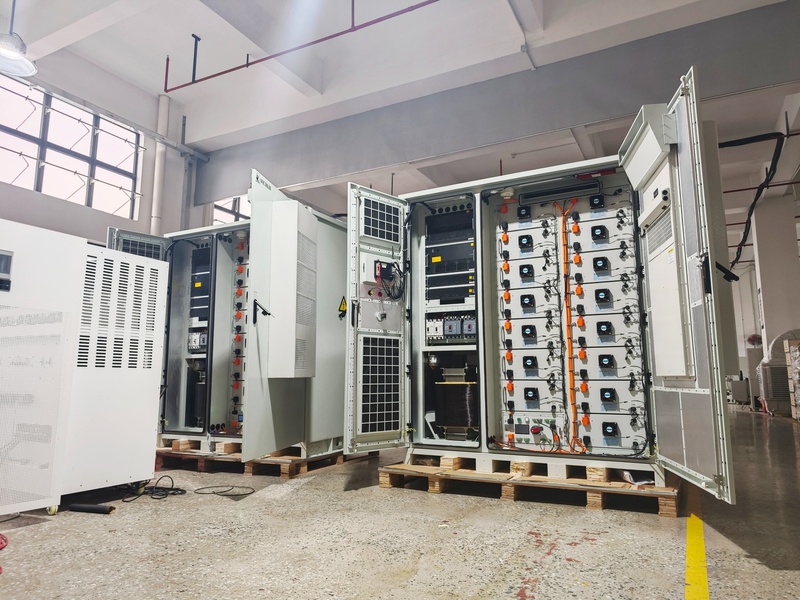
Commercial energy storage systems for 120kW+ hotels should be designed from the load list, not from a fixed product package. The system normally includes PV modules, battery cabinets, PCS or hybrid inverter equipment, EMS control, BMS protection, distribution cabinets, cables, protection devices and optional diesel generator integration.
For WHC Power projects, the correct discussion is C&I energy storage configuration. Buyers can review the WHC Power C&I energy storage system page and prepare a project load profile before asking for a quotation.
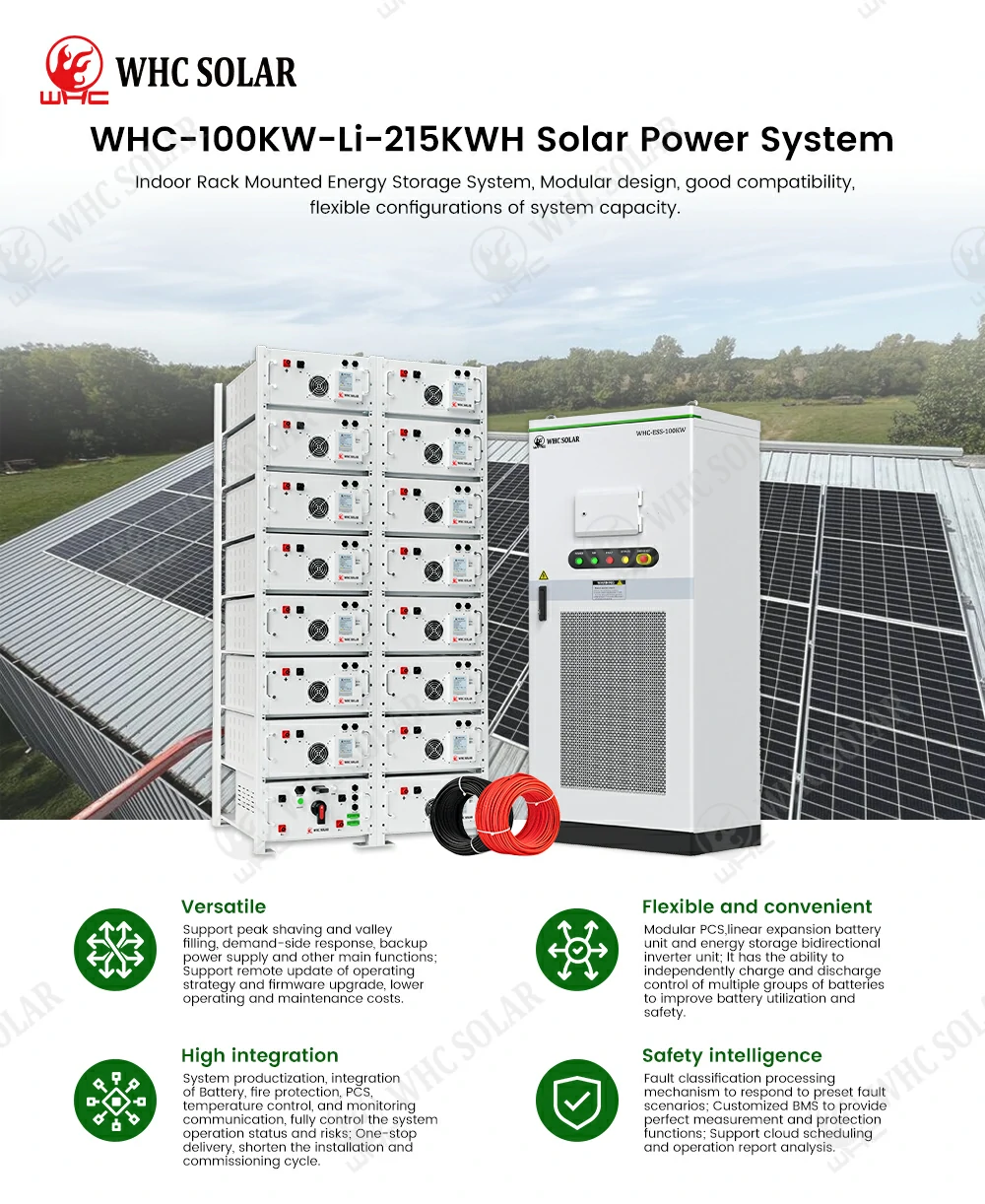
For reference, WHC Power provides a 100KW-215KWH solar energy storage system for commercial and industrial projects. Larger hotels, resorts or mixed-use hospitality sites can also review the 500KW-1MWH solar energy storage system when planning higher-capacity backup, diesel reduction or peak-shaving projects.
PV Capacity
PV capacity should support daytime hotel loads and battery charging. Roof area, ground space, shading, local solar conditions and daytime load demand all affect the final PV design. Hotels with daytime laundry, kitchen and pump loads may use solar power directly during business hours.
Battery Capacity
Battery capacity should be based on critical load power and required backup hours. A hotel may not need to back up every AC unit or event load from battery. Instead, the battery should protect essential guest service, IT, security, water and selected comfort loads.
PCS or Inverter Capacity
The PCS or inverter must handle continuous load and startup surge. Pumps, compressors and air-conditioning systems may need higher surge capacity than their rated running power. EPC contractors should confirm whether loads are single-phase, three-phase or mixed.
EMS and BMS Coordination
The EMS manages system logic, including PV use, battery charge and discharge, grid charging, generator support and load priority. The BMS protects the battery system and communicates battery status. In commercial energy storage projects, EMS and BMS coordination can reduce commissioning risk.
Diesel Reduction Strategy With Commercial Energy Storage Systems
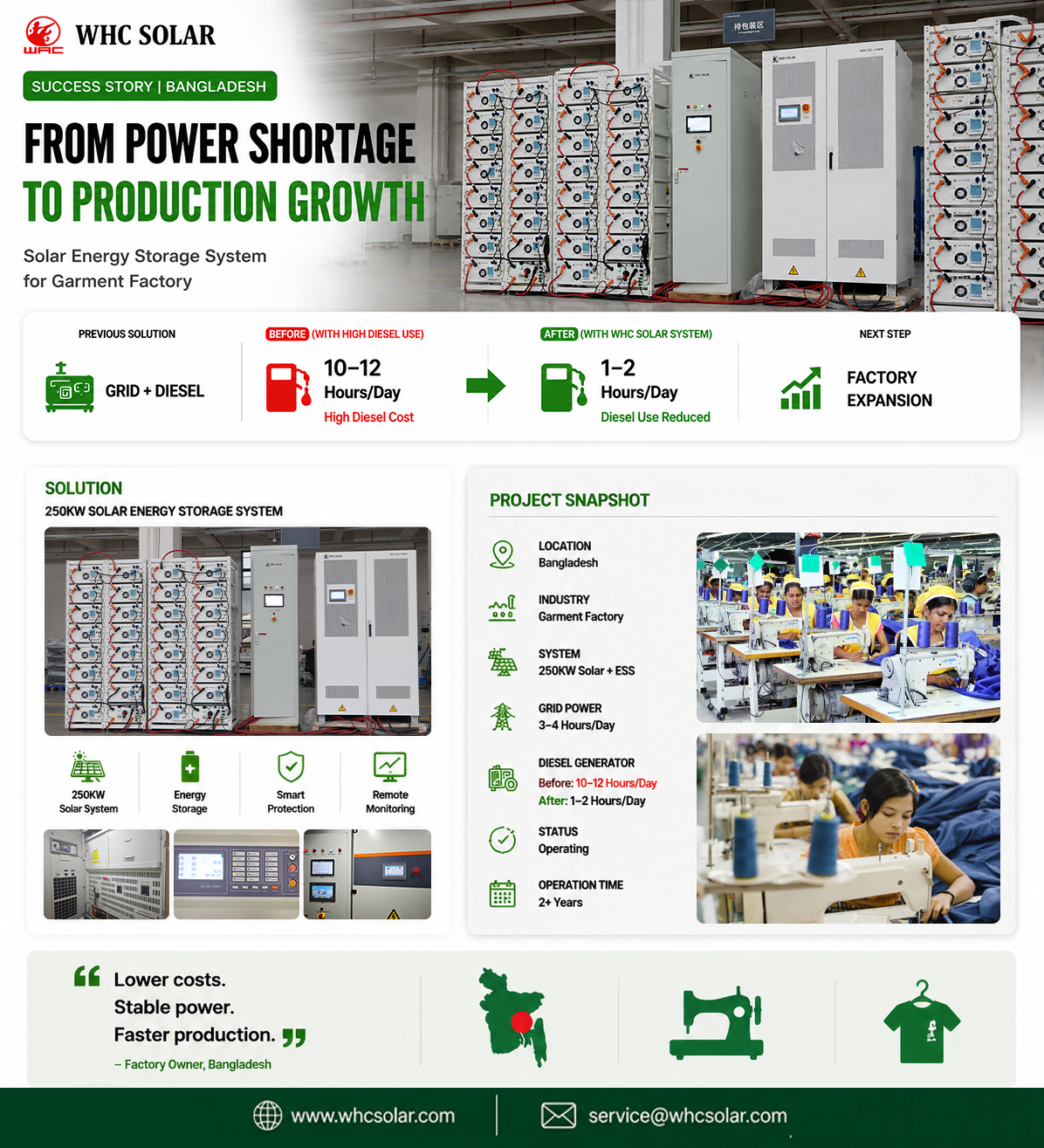
Many African hotels already own diesel generators. The goal of commercial energy storage systems is often not to remove the generator immediately. A more practical goal is to reduce generator runtime, fuel consumption, noise, service intervals and emergency dependence.
During the day, PV can support hotel loads and charge the battery. During evening outages, the battery can support priority loads. The generator can start only when the battery state of charge is low, when heavy loads are required, or when cloudy weather reduces solar generation.
The IRENA energy storage overview explains that storage helps integrate renewable power and supports self-consumption of rooftop solar. For hotels, this means solar energy can be shifted into guest service hours instead of being wasted during low-load periods.
Commercial Energy Storage Systems Scenarios for African Hotels
Hotel storage projects are not all the same. A resort, business hotel and roadside lodge may require different load priorities, backup duration and generator logic.
Business Hotel in a City With Unstable Grid Power
A city hotel may need to keep elevators, reception, payment systems, WiFi, security, water pumps and selected guest-room circuits working during outages. Commercial energy storage systems should protect service continuity while avoiding oversized backup for non-critical comfort loads.
Resort or Lodge With High Diesel Cost
A resort or lodge may have large evening demand, water pumping and refrigeration loads. If diesel delivery is expensive or unreliable, the system should emphasize PV charging, battery autonomy and generator runtime control.
Hotel With Conference and Event Loads
A hotel with event halls may have occasional high peak loads. These loads should be separated from daily guest service loads. Otherwise, the system may be oversized for loads that operate only during events.
Commercial Energy Storage Systems for Backup Power and Peak Shaving
Backup power and peak shaving are different project goals. Backup power focuses on keeping critical loads running during outages. Peak shaving focuses on reducing high demand charges or reducing generator operation during peak load periods.
Some African hotel projects need both. The system may charge during solar hours, support evening peak demand and still reserve battery capacity for outage protection. This is why EMS strategy matters. The battery should not be fully discharged for peak shaving if the hotel still needs emergency backup later in the night.
| Project Goal | Design Focus | Hotel Example | Quotation Data Needed |
|---|---|---|---|
| Backup power | Critical load list and backup hours | Keep reception, lights, WiFi, security and water running | Load list, required hours, outage frequency and battery reserve target |
| Diesel reduction | PV generation, battery cycling and generator start logic | Reduce daily generator runtime in a resort or lodge | Current diesel runtime, fuel cost, generator size and load schedule |
| Peak shaving | Peak load timing and discharge control | Support evening guest-room and kitchen peak demand | Meter data, tariff structure, load profile and EMS strategy |
| Solar self-consumption | Use daytime PV and store surplus solar energy | Daytime laundry, kitchen, pumping and battery charging | PV area, daytime load, battery charging target and operation schedule |
Procurement Risks EPC Contractors Should Control
Hotel owners may focus on price, but EPC contractors must control technical and commissioning risk. Commercial energy storage systems should be purchased with clear requirements for battery capacity, PCS power, voltage range, EMS functions, BMS communication, protection design and installation environment.
The most common procurement risk is incomplete load information. If the quotation ignores pump surge, air-conditioning policy, kitchen equipment, cold room runtime or event hall loads, the system may not match the hotel’s real operation.
Another risk is unclear generator integration. The EPC contractor should confirm whether the system will allow generator charging, automatic start signals, manual operation, generator protection and priority logic. Without this planning, diesel reduction may be weaker than expected.
Quotation Data for Commercial Energy Storage Systems in Hotels
Before requesting a 120kW+ hotel energy storage quotation, prepare a practical project file. The more complete the project data, the easier it is to size the system and reduce revision time.
| Data Item | Why It Matters | Example Detail to Provide |
|---|---|---|
| Hotel size and operation | Defines daily load pattern | Room count, occupancy pattern, kitchen hours and event hall use |
| Critical load list | Defines backup power capacity | Reception, IT, lighting, pumps, refrigeration and security |
| Existing generator | Affects diesel hybrid control | Generator kVA, voltage, phase, daily runtime and fuel cost |
| PV installation space | Affects solar contribution and battery charging | Roof area, ground area, shading and preferred mounting method |
| Backup-hour target | Defines battery capacity and cost | Required backup hours for critical loads and comfort loads |
Supplier Evaluation for 120kW+ Hotel Storage
A hotel project buyer should evaluate the supplier by system capability, not only by battery price. The supplier should understand PV, battery, PCS or inverter, EMS, BMS, distribution and generator integration as one commercial energy storage solution.
Useful supplier questions include: Can the supplier support 100kW+ C&I storage projects? Can the solution include battery cabinet, PCS or inverter matching, EMS strategy and diesel generator logic? Can the team review load priorities before quotation? Can the supplier provide project documentation for EPC installation and owner review?
For WHC Power, internal project discussion should focus on C&I energy storage. Buyers can use the commercial energy storage solution page, C&I energy storage project page and WHC Power contact page when preparing hotel project requirements.
ROI Thinking: Diesel Saving, Guest Experience and Risk Reduction
Hotel ROI should not be calculated only by battery price. A better commercial view includes diesel saving, generator maintenance reduction, fewer service interruptions, better guest experience and lower outage risk.
The World Bank solar mini-grid report notes that solar mini-grids can provide reliable renewable electricity and reduce dependence on diesel-fueled systems. Hotel projects are different from village mini-grids, but the same logic applies: storage becomes more valuable when reliable power supports productive use and daily service.
For a hotel owner, the commercial question is simple: which loads must never stop, how many generator hours can be reduced, and what system size gives the best balance between reliability and investment?
Conclusion: Size the System Around Hotel Service
Commercial energy storage systems for African hotels should be sized around guest service, diesel reduction and real load behavior. For 120kW+ projects, the key decision is not only battery capacity. The buyer must confirm PV input, PCS or inverter capacity, battery storage, EMS logic, BMS communication, generator integration and load priority.
WHC Power focuses on commercial energy storage systems for solar C&I project buyers. For hotel, resort and guest facility projects in Africa, prepare the load profile, generator information, backup-hour target and site details before asking for a quotation.
FAQ
What size commercial solar energy storage system does a hotel need?
The correct size depends on room count, critical loads, pump power, kitchen and refrigeration demand, backup-hour target, PV space and generator condition. A 120kW+ project should be designed from a full hotel load profile.
Can a hotel use solar storage with an existing diesel generator?
Yes. Many hotel projects use a solar + battery + diesel hybrid structure. The generator can support heavy loads, cloudy periods or emergency charging, while solar and battery storage reduce daily diesel runtime.
Which hotel loads should receive backup first?
Reception, booking systems, payment equipment, WiFi, security, emergency lighting, water pumps and key refrigeration loads usually have the highest priority. Comfort loads should be added according to battery budget and hotel policy.
Is peak shaving useful for African hotels?
Peak shaving can be useful when the hotel has high demand charges, generator peak fuel use or evening load spikes. It should be balanced with backup reserve so the battery is not empty during an outage.
What information should EPC contractors send to WHC Power?
EPC contractors should send the hotel load list, daily operating schedule, backup-hour target, PV installation space, existing generator details, grid condition, voltage and phase information, and expected project scale.




.svg)


