
Blog
Industrial Energy Storage System for African Factories: 100kW+ Solar Storage Configuration and ROI Checks


For African factory owners and EPC contractors, unstable electricity is not only an energy problem. It affects production planning, machine uptime, delivery schedules, diesel spending and customer confidence. When a factory depends only on the grid and diesel generators, every outage can become a production loss.
An industrial energy storage system can help factories use solar power more effectively, reduce generator runtime and keep critical loads running during grid interruptions. However, a factory project above 100kW must be designed as a commercial and industrial power system, not as a larger version of a home solar kit.
This guide explains how to evaluate a 100kW+ solar storage project for factories in Africa, West Africa, Central Africa and Sub-Saharan Africa. It focuses on load analysis, battery capacity, PCS/inverter selection, EMS/BMS control, diesel reduction logic and ROI checks for factory owners and EPC project teams.
Why African Factories Need Industrial Energy Storage
Factories usually have different power needs from hotels, schools or hospitals. A factory may run motors, compressors, processing machines, cold rooms, packaging lines, lighting, office loads and security systems. Some loads are continuous, while others start suddenly and create high surge current.
The IEA Africa Energy Outlook 2022 notes that Africa has strong solar resources, yet electricity access and reliability remain major challenges in many regions. For industrial users, this creates a practical question: how can a factory control energy cost while keeping production stable?
The World Bank also tracks electricity outage exposure through Enterprise Surveys. Its indicator for firms experiencing electrical outages reflects why backup power remains a real business issue in many emerging markets. For African factories, solar plus storage can become part of a long-term reliability strategy.
WHC Power focuses on commercial and industrial solar storage projects. Factory owners can review WHC Power’s commercial energy storage systems to understand the available C&I system direction before preparing a project quotation.
Start With the Factory Load Profile
A correct industrial energy storage system starts with the load profile. The project team should list the equipment, rated power, starting current, daily operating hours and priority level. This step is important because battery capacity alone cannot solve poor load planning.
For example, a food processing factory may need storage for cold rooms, production machines and lighting during evening hours. A metal processing workshop may have large motor loads and short high-power peaks. A packaging factory may need stable power for production lines, air compressors and office equipment during grid interruptions.
Before selecting a system size, the buyer should separate loads into three groups: critical loads, flexible loads and non-essential loads. Critical loads should receive backup support first. Flexible loads can be scheduled when solar output is high. Non-essential loads may be disconnected during outage or battery backup mode.
100kW+ Factory Solar Storage Configuration Logic
For many small and medium factories, a 100kW solar storage project can be the first commercial-scale step. Larger factories may require 200kW, 500kW or even MW-level systems. The correct configuration depends on site load, roof or land area, battery backup target, grid quality and diesel generator use.
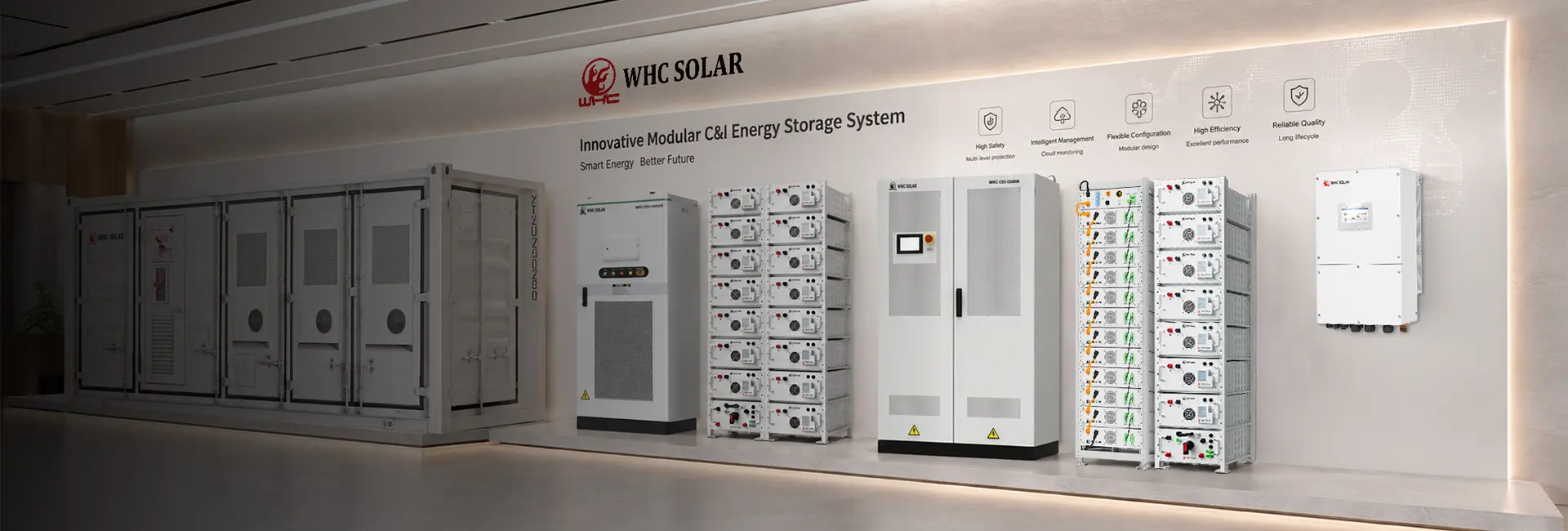
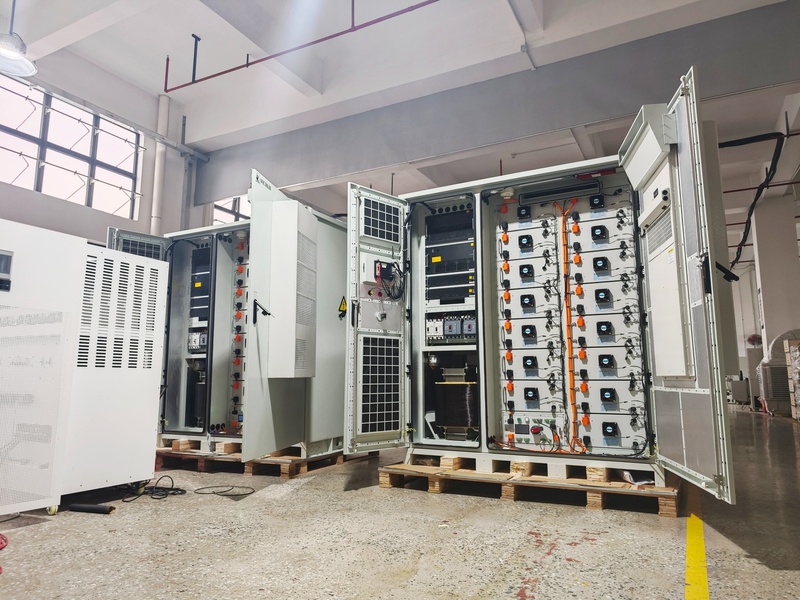
A typical C&I solar storage system may include PV modules, battery cabinets, PCS or hybrid inverter, EMS, BMS, distribution cabinet, protection devices and monitoring. If the site already has a diesel generator, the system design may also include solar, storage and diesel coordination.
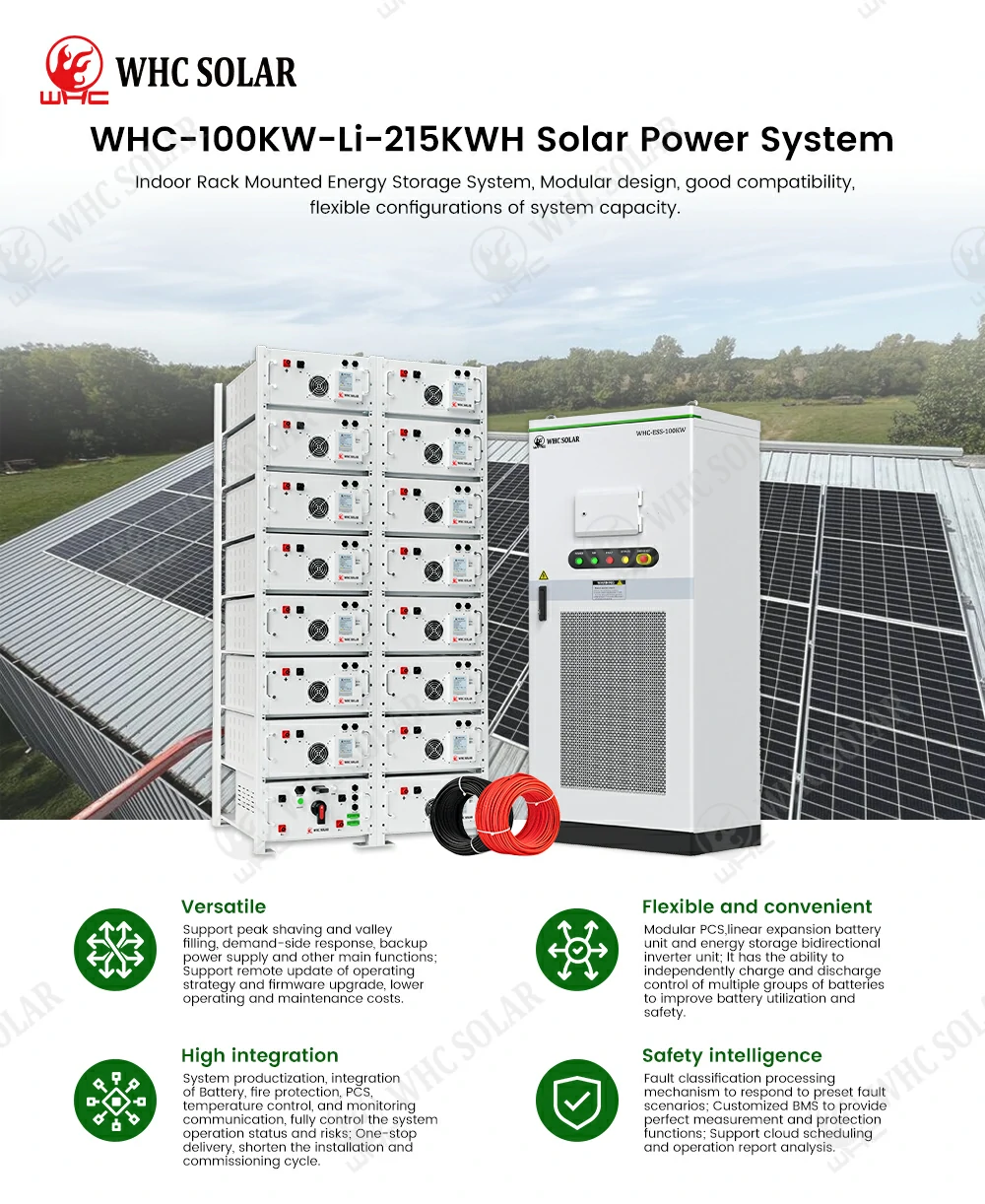
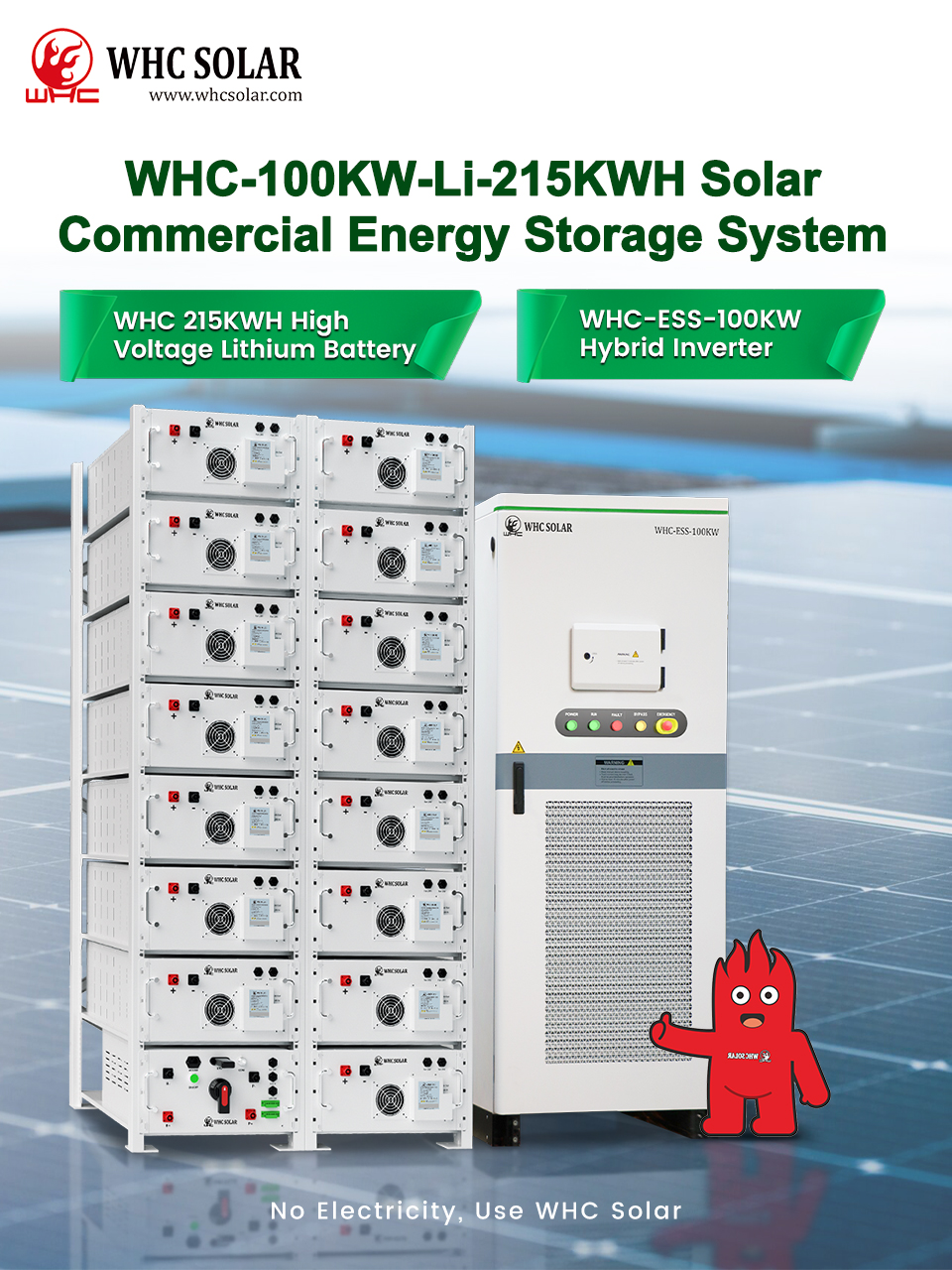
WHC Power provides a 100KW-215KWH solar energy storage system for C&I projects. For larger factory and industrial park applications, buyers can also review the 500KW-1MWH solar energy storage system.
Factory Energy Storage Sizing Checklist
The table below gives a practical screening method for factory owners and EPC contractors before requesting a full technical configuration.
| Project Check | What to Confirm | Why It Matters |
|---|---|---|
| Peak load | Maximum running load and motor starting demand | PCS or inverter capacity must handle real factory load behavior, not only average demand. |
| Critical load list | Machines, cold rooms, control systems, lighting and security loads that must remain powered | Backup power should protect the loads that prevent production loss or product damage. |
| Backup hours | Expected battery runtime during grid outage or generator-off operation | Battery capacity must match operating strategy, not only installed PV size. |
| Diesel generator status | Generator rating, fuel cost, operating hours and control interface | Solar storage can reduce diesel runtime only when dispatch logic is designed correctly. |
| Battery room or container | Installation space, ventilation, temperature, cable route and fire safety planning | Poor installation planning can increase maintenance risk and delay commissioning. |
| ROI inputs | Grid tariff, diesel price, outage cost, maintenance cost and production value | Factory ROI depends on avoided cost and reliability value, not only energy savings. |
Peak Shaving, Backup Power and Diesel Reduction
Factory buyers usually evaluate commercial energy storage systems for three business goals: peak shaving, backup power and diesel reduction. Each goal changes the system configuration.
Peak Shaving
Peak shaving is useful when a factory pays high demand charges or faces high tariff periods. The battery stores solar or off-peak electricity and releases it during high-demand periods. In this case, the EMS must manage charging and discharging according to the factory’s load curve.
Backup Power
Backup power is useful where grid outages interrupt production. The battery should support critical loads for a defined period. In this case, the design must include fast transfer logic, correct load separation and enough battery capacity for essential operations.
Diesel Reduction
Diesel reduction is useful where factories run generators for long hours. Solar can supply daytime energy, while storage can smooth PV output and reduce generator starts. If a generator remains in the system, the EMS should coordinate PV, battery, grid and diesel operation.
Battery, PCS, EMS and BMS: What Factory Buyers Should Check
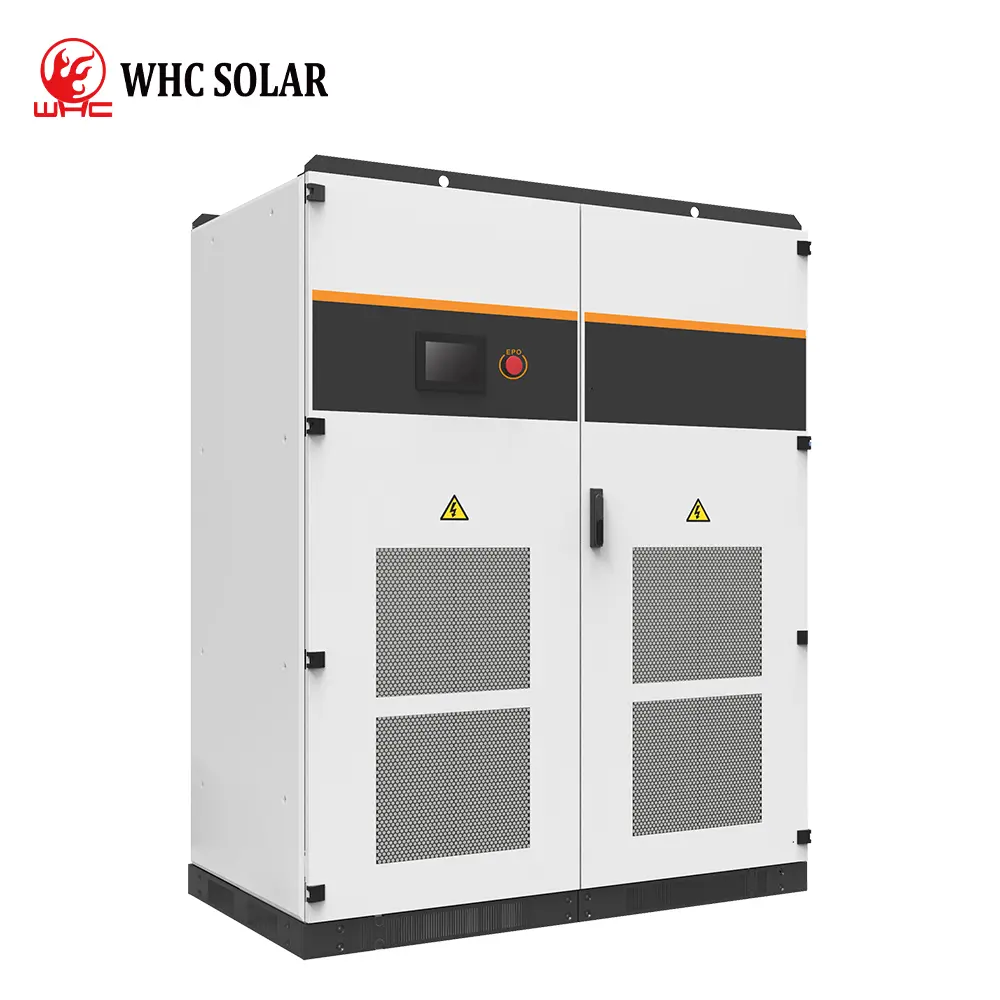
An industrial battery energy storage system depends on several core components. The battery cabinet stores energy. The PCS or inverter controls power conversion. The EMS manages operating strategy. The BMS monitors battery voltage, current, temperature and protection status.
For factory projects, these parts must work together. If the PCS is too small, large machines may trip the system. If the battery is too small, backup time will not meet the site requirement. If EMS logic is not clear, diesel reduction may be weaker than expected. If BMS communication is not matched properly, battery operation can become unstable.
Because of this, factory owners should avoid evaluating only battery price. A complete C&I energy storage system quotation should explain system capacity, operating mode, protection design, installation requirements, monitoring method and maintenance support.
Typical Application Scenarios in Africa
Food Processing Factory
A food processing site may need stable power for cold rooms, cutting machines, packaging equipment and lighting. In this scenario, the energy storage system should protect refrigeration and production continuity first. Battery backup can also reduce product loss during grid failure.
Textile or Packaging Workshop
A workshop with production lines and motors may face high starting current and daytime production peaks. The system should be sized around peak load and motor behavior. A 100kW+ solar storage project may help reduce grid dependence and stabilize daytime operations.
Industrial Park or Multi-Tenant Facility
An industrial park may have several tenants with different load patterns. In this case, the project owner may need a larger C&I system, separate metering and a clear load management plan. WHC Power’s factory and manufacturer project category can help buyers review relevant application directions.
How to Evaluate ROI Before Ordering
ROI for an industrial energy storage system should not be based only on solar generation. A factory should calculate several avoided costs: reduced diesel fuel use, lower generator maintenance, fewer production interruptions, reduced peak demand charges and possible daytime self-consumption savings.
However, ROI also depends on local site data. A factory with frequent outages and high diesel cost may see stronger business value than a site with stable grid supply. A factory with cold storage, export production or time-sensitive orders may also value backup power more than a simple office building.
Before confirming the investment, prepare the following data for the supplier: monthly electricity bills, diesel generator records, outage frequency, critical load list, roof or land area, transformer capacity, target backup hours and future expansion plan.
Supplier Selection for African Factory Projects
A qualified C&I storage supplier should help the buyer move from a rough idea to a technical configuration. Factory owners should ask for system sizing logic, equipment list, battery capacity recommendation, PCS/inverter rating, EMS control strategy and installation requirements.
WHC Power emphasizes real load analysis, mature system design and lifecycle support for African projects. Buyers can review a factory-related project page such as Factory Energy Storage System and then send their project information for configuration review.
For project quotations, use the WHC Power contact page: Request a C&I solar storage project quote.
Conclusion
An industrial energy storage system for an African factory should be designed around production load, backup requirement, diesel reduction strategy and long-term ROI. For projects above 100kW, buyers should evaluate the complete system, including battery, PCS, EMS, BMS, PV input, protection devices and installation conditions.
For factory owners, the key question is not only how much battery capacity to buy. The better question is how the system will protect production, reduce diesel dependence and support future expansion. For EPC contractors, the value is in providing a reliable, well-sized C&I energy storage solution that fits local African site conditions.
Send your factory load profile, diesel generator data, backup-hour target and project location to WHC Power to request a 100kW+ commercial solar storage configuration.
FAQ
What size industrial energy storage system does a factory need?
The correct size depends on peak load, critical load, backup hours, diesel generator use, solar capacity and operating schedule. A 100kW+ project should be calculated from real factory data rather than a standard package.
Can solar storage reduce diesel generator use in factories?
Yes, when the system is designed correctly. Solar can supply daytime loads, while batteries reduce generator starts and support critical loads. The EMS should coordinate PV, battery, grid and diesel operation.
Is a 100kW solar energy storage system enough for a factory?
It may be enough for a small or medium factory with selected critical loads. Larger production sites may require 200kW, 500kW or MW-level systems depending on load and backup requirements.
What data should a factory provide before quotation?
Provide monthly electricity bills, load list, generator size, diesel consumption, outage frequency, backup-hour target, installation space and project location. These details help the supplier prepare a realistic system configuration.
Should factory owners choose battery-only storage or solar plus storage?
Battery-only storage may support backup or peak shaving, but solar plus storage can reduce grid and diesel energy consumption. For African factories with good solar resources, a combined system is often more practical for long-term operating cost control.



.svg)


