
Blog
Industrial Energy Storage System for African Water Treatment Plants and Public Utility Facilities


An industrial energy storage system for an African water treatment plant is not planned like a small backup power unit. Water utilities may need power for intake pumps, treatment equipment, dosing systems, control rooms, lighting, security, offices, and communication systems. If the system is undersized, the facility may still face service interruptions. If it is oversized, the project owner may lock capital into unused battery capacity.
Across West Africa, Central Africa, and Sub-Saharan Africa, public utility facilities often face weak grid supply, voltage fluctuation, diesel generator dependence, and rising expectations for reliable public services. The IEA Africa Energy Outlook highlights the continued importance of reliable electricity access and solar-based distributed energy solutions. The World Bank Mission 300 also shows why electricity access remains central to Africa’s economic and public service development.
This guide explains how EPC contractors, municipal project teams, and facility owners can evaluate a 100kW plus industrial energy storage system before requesting a quotation. It covers load priority, PV and battery sizing logic, PCS and EMS selection, diesel generator coordination, and supplier checks for public utility projects.
Why an Industrial Energy Storage System Is Different for Water Utilities
A water treatment plant has a mixed load profile. Some loads are continuous, some are motor-driven, and some must stay online even during grid failure. For example, control systems and communication equipment may require stable power all day, while pumps and treatment processes may follow operating schedules.
Because of this load pattern, an industrial energy storage system should not be selected only by battery capacity. The project team should first identify which loads are critical, which loads can be delayed, and which loads should remain on diesel backup only. This helps the supplier design a more practical C&I storage system instead of a generic battery package.
For WHC Power’s C&I project positioning, the key question is not simply “how many batteries are needed?” The better question is: what combination of PV, battery storage, PCS, EMS, switchgear, and diesel backup can support the facility’s operating schedule at an acceptable investment level?
Typical Public Utility Applications in African Markets
Municipal Water Treatment Plants
Municipal treatment sites may need backup power for intake control, filtration support, dosing equipment, monitoring systems, site lighting, and selected pumping loads. In this case, the industrial energy storage system should protect public service continuity and reduce unnecessary diesel generator runtime.
Rural Water Supply Stations
Remote water supply stations may depend heavily on diesel generators when grid power is weak or unavailable. A solar C&I storage system can help store daytime PV energy, support control equipment, and reduce generator starts during low-load periods.
Public Utility Compounds and Service Facilities
Some facilities combine water administration offices, workshop areas, control rooms, equipment storage, and security systems on one site. These projects need load segmentation because office loads, workshop tools, pumps, and communication systems do not have the same backup priority.
Load Priority Table for Water Treatment Storage Projects
| Load Group | Typical Equipment | Backup Priority | Storage Design Note |
|---|---|---|---|
| Critical control loads | Control room, communication, monitoring, security, lighting | High | Should be included in the backup circuit and protected from unstable grid power. |
| Treatment process loads | Dosing, filtration support, selected treatment equipment | Medium to high | Should be sized according to operating schedule, backup duration, and process importance. |
| Motor and pump loads | Intake pumps, transfer pumps, booster pumps | Project dependent | Starting current, run time, and duty cycle must be confirmed before PCS selection. |
| Non-critical loads | General offices, non-essential sockets, some workshop loads | Low | Can be delayed, limited, or excluded to control battery cost. |
How to Size a 100kW Plus Industrial Energy Storage System
For early quotation planning, EPC contractors can begin with a simple formula: critical load power multiplied by required backup hours, then adjusted for usable depth of discharge, system efficiency, and expansion margin. This does not replace engineering design, but it helps the buyer avoid unrealistic quotations.
For example, if a treatment plant wants to protect 80kW of critical loads for 3 hours, the starting energy requirement is 240kWh before system losses and usable battery limits. After adjustment, the practical battery capacity may need to be higher. The final result depends on load type, site temperature, battery chemistry, PCS design, EMS strategy, and diesel generator coordination.
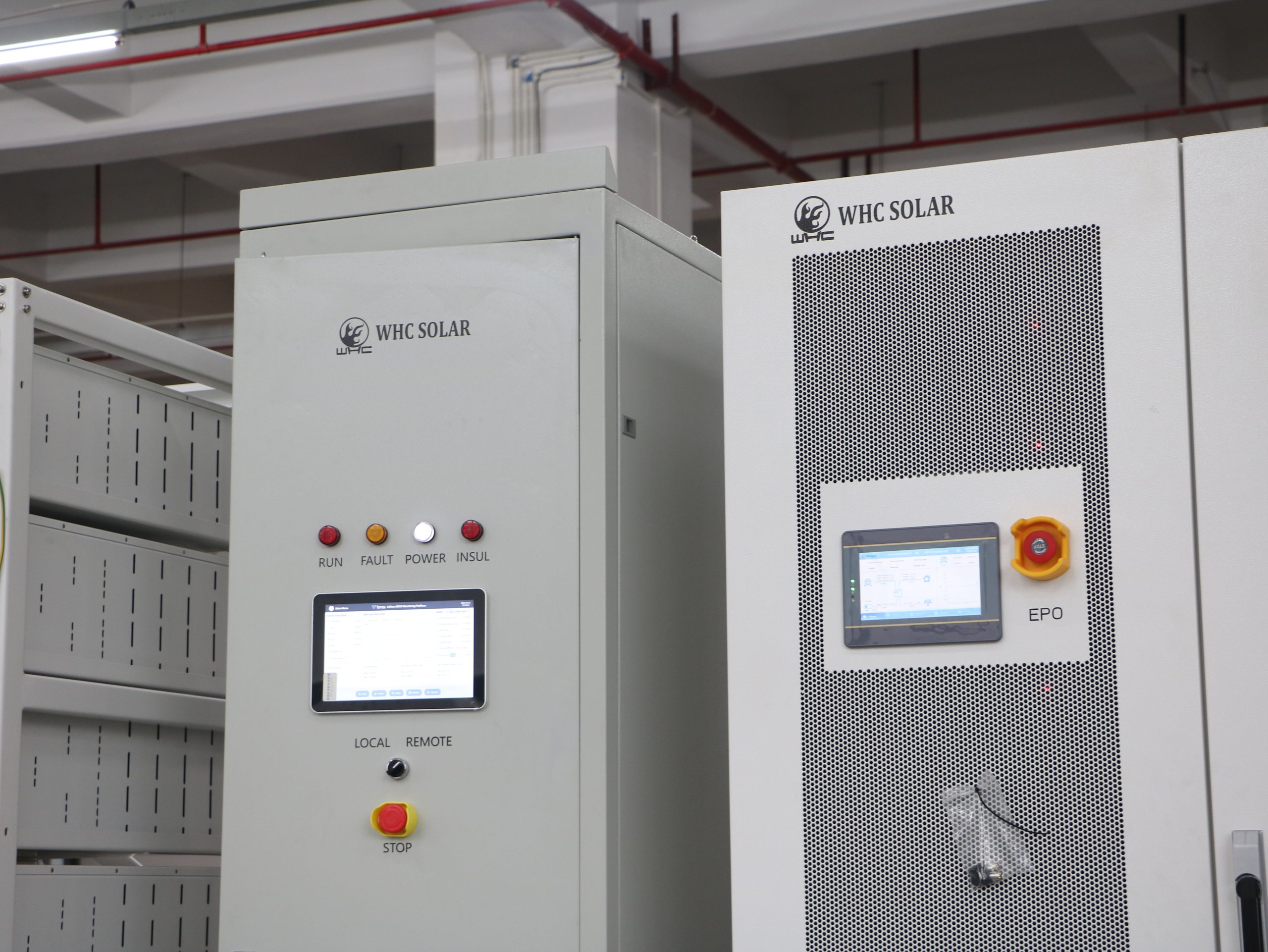
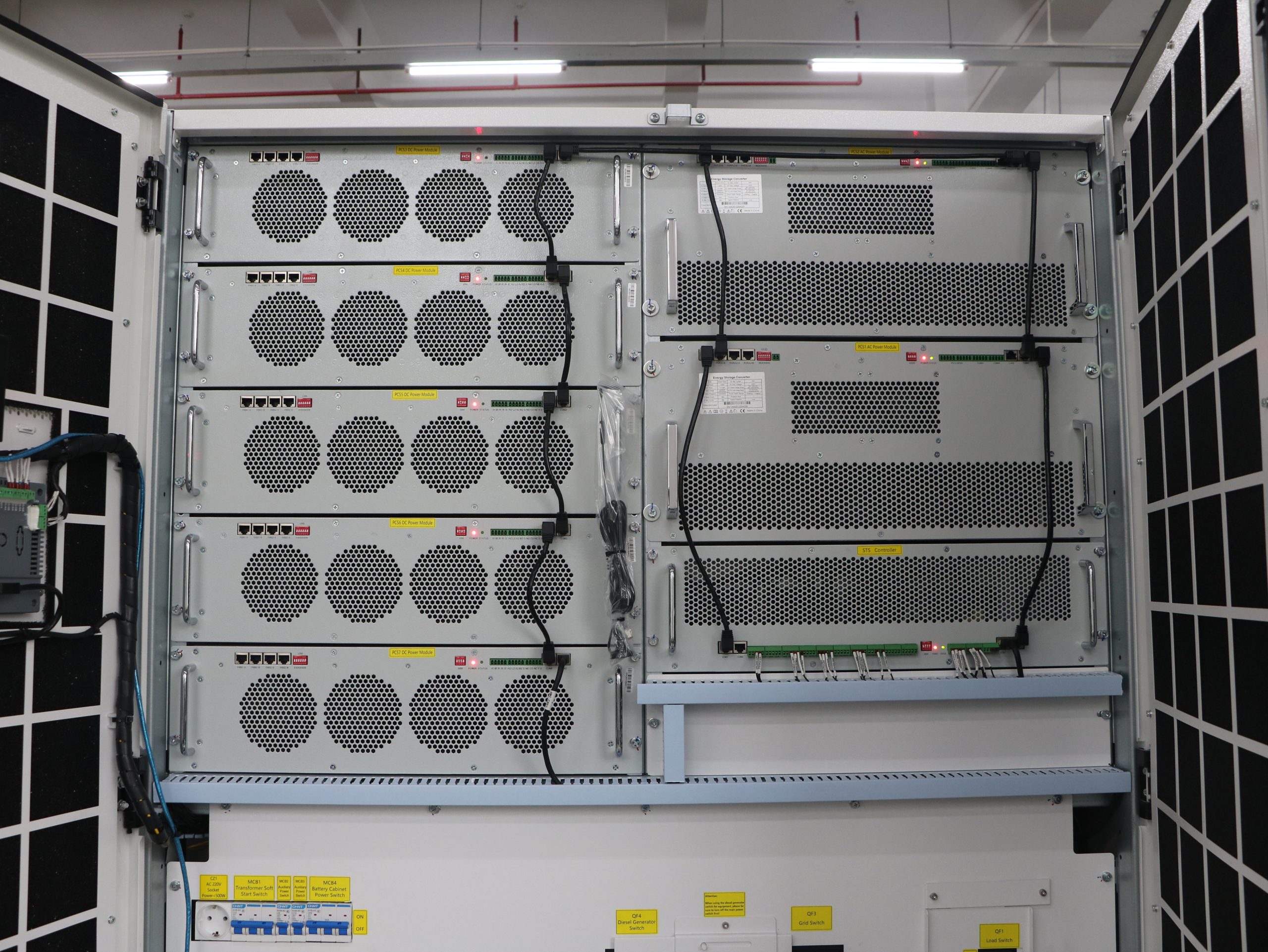
In many public utility projects, the system may include a 100kW or larger PCS, battery cabinets or containerized storage, PV input, EMS monitoring, BMS protection, AC distribution, and optional diesel generator interface. Buyers should send a load list, single-line diagram if available, required backup duration, local grid condition, and diesel generator information before asking for a final quotation from WHC Power C&I energy storage system.
Key Components Buyers Should Compare
Battery System
The battery system should match project-level backup duration, cabinet layout, site temperature, and future expansion requirements. For an industrial battery energy storage system, buyers should ask for BMS protection logic, cabinet arrangement, usable energy estimate, communication interface, and maintenance requirements.
PCS and Inverter Capacity
The PCS must handle real load behavior, not only rated power. Pump motors, compressors, and treatment equipment may create starting current or changing load profiles. Therefore, the supplier should confirm whether the PCS can support the selected critical loads and whether the system needs load shedding or staged startup.
EMS Control Strategy
The EMS decides when to use PV, battery, grid, or diesel power. For water treatment plants, EMS logic should support backup priority, generator coordination, and operating schedule control. A good EMS plan helps reduce diesel waste and improves power stability for sensitive control systems.
Switchgear and Protection
Public utility facilities need clear protection design, proper isolation, and safe switching between power sources. The project contractor should confirm AC distribution, protection devices, grounding requirements, and emergency bypass planning with the supplier.
Procurement Checklist for EPC Contractors and Utility Owners
| Checkpoint | What to Ask the Supplier | Why It Matters |
|---|---|---|
| Load segmentation | Can the supplier separate critical, flexible, and non-critical loads? | It prevents oversizing and protects the loads that affect service continuity. |
| Battery capacity | What usable energy is available under the proposed operating strategy? | Rated capacity and usable backup capacity are not always the same. |
| PCS design | Can the PCS support pump loads and site startup behavior? | Motor loads may require stronger design review than office or lighting loads. |
| Diesel coordination | Can the system reduce low-efficiency generator runtime? | It helps improve fuel use and reduce unnecessary generator operation. |
| After-sales support | What documents, wiring guidance, and remote support are available? | Public utility projects need stable commissioning and long-term maintenance support. |
Solar Storage and Diesel Backup Comparison
Many African water treatment sites already use diesel generators. The issue is not whether diesel should disappear immediately. Instead, the project team should decide how battery storage, solar PV, grid power, and diesel backup should work together.
| Power Strategy | Best Fit | Main Limitation |
|---|---|---|
| Diesel-only backup | Emergency backup for short outages | Fuel cost, noise, maintenance, and low-load inefficiency. |
| Battery-only backup | Critical control loads and short-duration backup | May become expensive if all motor loads need long backup time. |
| Solar storage with diesel coordination | 100kW plus C&I projects with daily operation and backup demand | Requires proper engineering, EMS logic, and supplier support. |
Why Supplier Selection Matters for Public Utility Projects
A public utility energy project must be stable after installation. A low-price offer may look attractive, but weak configuration support can create commissioning delays, load mismatch, or poor backup performance. EPC contractors should compare suppliers by engineering response, C&I storage experience, component matching, documentation, and after-sales capability.
WHC Power focuses on solar commercial and industrial energy storage systems for project-based buyers. For a water treatment plant or public utility facility, buyers can request a configuration that considers load priority, backup duration, PV input, battery capacity, PCS power, EMS control, and diesel generator coordination. Start with the commercial and industrial energy storage system solution page, review available C&I energy storage project applications, or contact the WHC Power project team with your load profile.
Information to Prepare Before Requesting a Quotation
Before contacting a supplier, prepare the site location, daily operating hours, critical load list, total peak load, pump motor ratings, required backup duration, grid voltage, diesel generator size, available installation space, and whether the project will use rooftop PV, ground-mounted PV, or battery backup only.
This information allows the supplier to design a realistic industrial energy storage system instead of guessing from a single power rating. It also helps the buyer compare quotations on the same technical basis.
Conclusion
An industrial energy storage system for African water treatment plants and public utility facilities should be designed around service continuity, load priority, and long-term operating cost. The right solution is not simply the largest battery. It is a coordinated C&I system that combines battery storage, PCS, EMS, PV input, protection design, and diesel backup logic.
For EPC contractors and facility owners planning 100kW plus public utility projects, WHC Power can support quotation preparation with load-based configuration guidance. Send your load profile, backup time requirement, diesel generator information, and site conditions to request a C&I project configuration.
FAQ
What size industrial energy storage system is suitable for a water treatment plant?
The size depends on critical load power, backup duration, motor startup behavior, operating schedule, and whether diesel backup remains in the system. A 100kW plus C&I storage system is often more suitable when the facility has multiple treatment, control, and utility loads.
Can battery storage replace diesel generators completely?
In some projects, battery storage can reduce diesel runtime significantly. However, for long outages or heavy motor loads, many public utility facilities still use diesel as secondary backup. The best design depends on the site load profile.
Why is EMS important in a public utility energy storage project?
EMS helps decide when the system uses solar power, battery power, grid power, or diesel backup. For public utility projects, EMS control can improve reliability and reduce unnecessary generator operation.
What should EPC contractors send before asking for a quotation?
EPC contractors should send the load list, critical load priority, required backup hours, grid condition, diesel generator information, installation space, and project location.
CTA
Send your public utility load profile, required backup duration, and diesel generator information to WHC Power for a C&I storage configuration and commercial quotation.


.svg)


