
Blog
Commercial Battery Energy Storage Systems for African Mines: 200kW+ Solar + Diesel Hybrid Configuration Guide

Battery energy storage is becoming a practical procurement issue for African mine sites that operate far from stable grid power. A mine may depend on diesel generators for crushers, conveyors, pumps, lighting, workshops, offices, worker camps and security systems. When diesel prices rise or generator maintenance becomes difficult, the power system becomes a direct production risk. This is why many EPC contractors and mine owners now evaluate commercial battery energy storage systems as part of a solar + diesel hybrid power design.
This guide is written for EPC contractors, project contractors, mine owners and facility owners planning 200kW+ C&I energy storage projects in Africa, West Africa, Central Africa and Sub-Saharan Africa. It explains how to match PV, battery capacity, PCS or inverter capacity, EMS control and diesel generator operation for mine power projects.
Why Mines Need Battery Energy Storage
A mine power system is different from a normal commercial building. The load can include heavy motors, high starting current, dust, heat, long operating hours and strict production schedules. If power is unstable, equipment may stop, fuel cost may increase and site managers may lose production time.
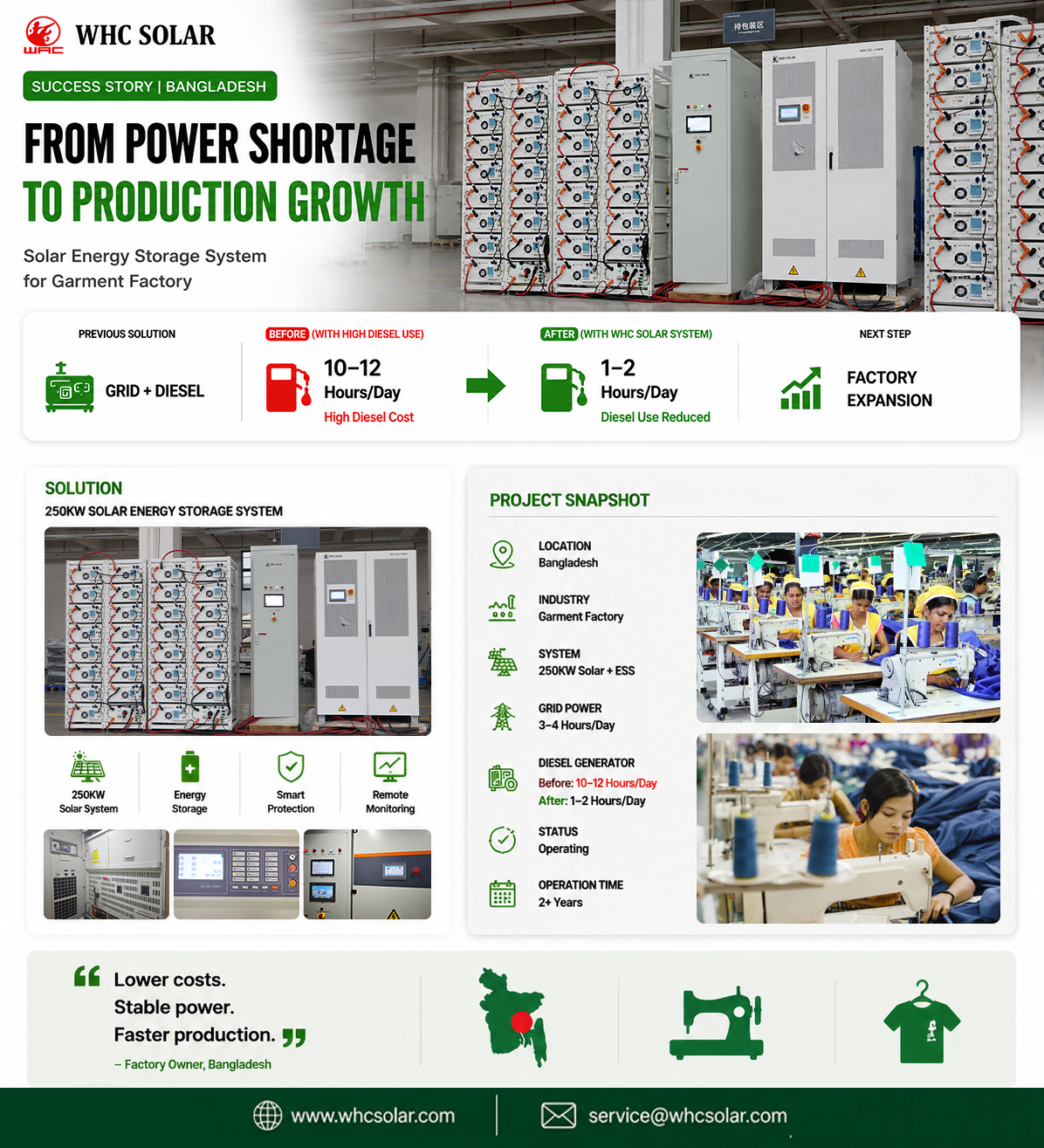
Commercial battery energy storage systems help mines use solar power during daytime, reduce diesel generator runtime, support critical loads during outages and improve power stability. Battery energy storage can also smooth solar output and help the diesel generator run in a more efficient load range instead of running lightly loaded for long periods.
The World Bank battery storage program brief highlights hybrid solar PV plus storage as a way to support reliable electricity supply and diesel displacement in developing markets. The IEA Batteries and Secure Energy Transitions report also notes that battery storage can support electricity security and backup power for critical facilities.
Typical 200kW+ Mine Load Context
A 200kW+ mining energy storage project should start with a load audit, not a product quotation. The EPC team should separate continuous loads, motor loads, critical loads and flexible loads. This allows the project owner to decide which loads need battery backup and which loads can remain on generator supply during high-demand periods.
For example, a quarry may prioritize crushers, pumps, lighting and security. A gold processing site may focus on pumps, conveyors, process control and worker camp loads. A remote exploration camp may need reliable power for offices, workshops, communication equipment, water pumping and night lighting.
| Mine Load Type | Power Design Concern | Storage Configuration Impact |
|---|---|---|
| Crushers and conveyors | High starting current and production sensitivity | PCS or inverter capacity must support surge and stable operation. |
| Water pumps | Motor load and long daily runtime | Battery and EMS should prioritize daytime solar use and backup logic. |
| Workshops and offices | Mixed loads with lighting, tools and computers | Can be placed on critical-load circuits for stable backup. |
| Worker camp loads | Evening demand and comfort loads | Battery capacity should be checked against night backup hours. |
Solar + Diesel Hybrid Configuration for Mines
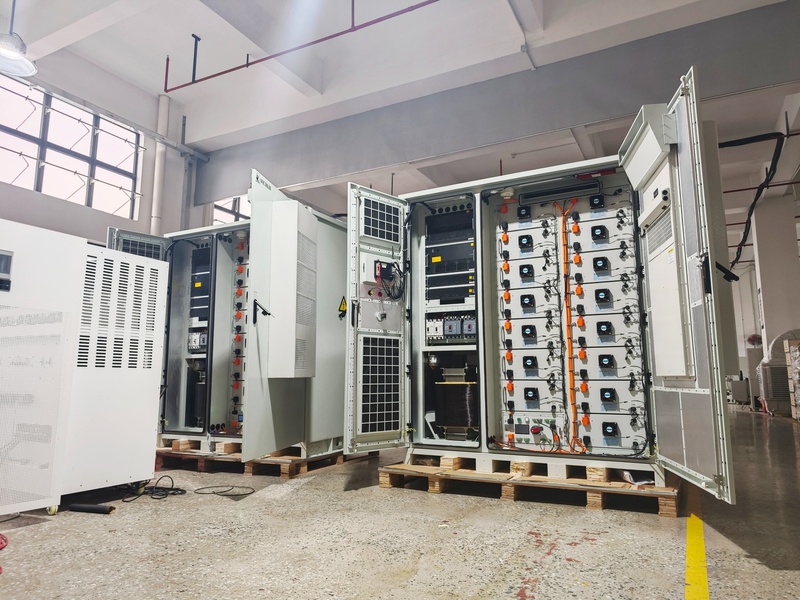
A mine hybrid system usually combines solar PV, commercial battery energy storage systems, diesel generators, PCS or hybrid inverters, EMS control, protection devices and distribution panels. The goal is not to remove diesel immediately in every case. In many African mining projects, the practical goal is to reduce diesel runtime, improve backup reliability and lower operating risk.
WHC Power focuses on solar commercial and industrial energy storage systems. EPC contractors can use WHC Power C&I energy storage systems as a starting point for project configuration discussions. For project planning, the buyer should also prepare site voltage, generator rating, daily fuel consumption, operating schedule and critical-load list before requesting a system design.
PV Capacity
Solar PV capacity should be matched with daytime mine operation, available land, roof or ground mounting space, charging requirements and local irradiance. For mining sites, PV is often used to reduce generator fuel consumption during the day and charge the battery for evening or outage support.
Battery Capacity
Battery energy storage capacity should be calculated from usable energy, not only nominal kWh. The project team should confirm backup hours, DOD, battery reserve, PCS efficiency and load priority. A 200kW+ system may require several hundred kWh or more depending on backup duration and load behavior.
PCS, Inverter and Generator Coordination
The PCS or inverter must coordinate with solar input, battery charging, generator operation and load demand. Generator synchronization, anti-backfeed protection, voltage range and frequency stability must be checked before final configuration.
EMS Control
The EMS decides when to use solar power, charge the battery, discharge the battery, start the generator and protect critical loads. For mine projects, EMS logic should be discussed early because diesel reduction depends heavily on control strategy.
Battery Energy Storage Sizing Checklist for 200kW+ Mine Projects
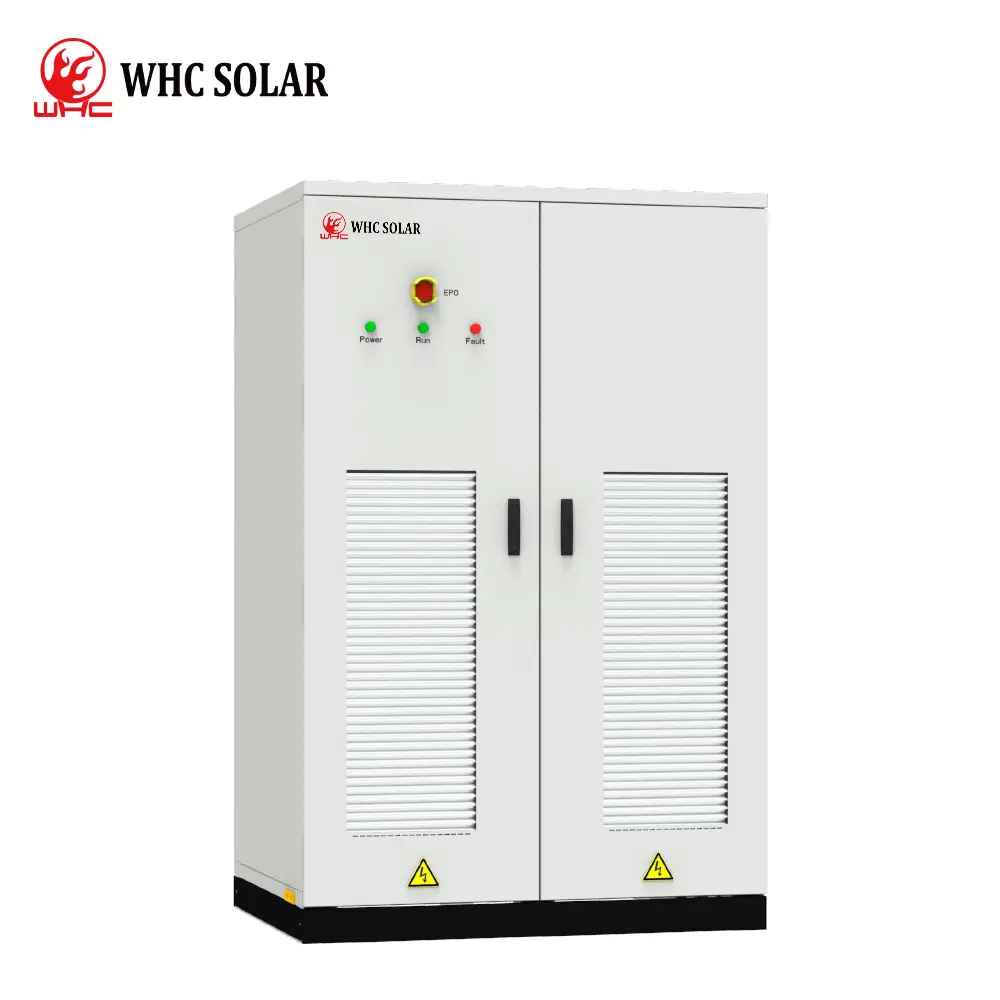
Battery energy storage sizing for mines should be based on measured or estimated load data. EPC contractors should avoid quoting only by “200kW system” because power capacity and energy capacity solve different problems. A 200kW PCS with 400kWh battery storage is very different from a 200kW PCS with 1MWh battery storage.
| Sizing Item | What EPC Contractors Should Ask | Why It Matters |
|---|---|---|
| Peak load | What is the highest simultaneous load in kW? | Defines PCS or inverter power and overload requirements. |
| Critical load | Which loads must run during grid or generator interruption? | Prevents oversizing the battery for non-critical equipment. |
| Backup duration | How many hours of backup are required? | Determines usable battery capacity and reserve energy. |
| Diesel generator rating | What are the generator kVA rating and operating schedule? | Supports generator dispatch, charging strategy and diesel reduction. |
| Expansion plan | Will the mine add more equipment or shifts later? | Affects cabinet layout, PCS selection and future battery expansion. |
Comparison: Diesel-Only vs Solar + Storage + Diesel Hybrid
For many African mines, the key comparison is not solar versus diesel. The real procurement question is whether a hybrid system can reduce diesel runtime while keeping diesel available for heavy-load periods and long low-solar days.
| Option | Best Fit | Main Procurement Risk |
|---|---|---|
| Diesel-only power | Short-term or temporary operation where fuel logistics are easy | High fuel cost, generator wear and exposure to fuel delivery delays. |
| Solar + diesel without battery | Daytime fuel reduction with limited backup needs | Solar fluctuation may limit diesel reduction and power stability. |
| Solar + battery + diesel hybrid | 200kW+ mines needing diesel reduction, backup and better power control | Requires correct EMS, protection design, battery sizing and generator coordination. |
Supplier Selection Points for Mine Energy Storage Projects
When evaluating commercial battery energy storage systems, mine owners should ask more than battery price per kWh. The supplier should understand C&I project design, system integration, PCS matching, EMS control, BMS protection, shipment planning and after-sales support for remote sites.
For a 200kW+ mine project, ask the supplier for a configuration proposal based on load data. The proposal should explain PV capacity, battery capacity, PCS or inverter rating, EMS strategy, generator connection logic, protection design and communication method. WHC Power can support this discussion through its commercial and industrial energy storage solution team.
BMS and Battery Safety
The BMS should monitor voltage, current, temperature, SOC and protection status. For mining environments, battery cabinet ventilation, operating temperature range, installation clearance and maintenance access should be reviewed by the project engineer.
PCS and EMS Integration
The PCS and EMS must support stable charge and discharge control. They should be selected according to power rating, grid or generator condition, communication requirements and project operation mode.
Project Documentation
EPC contractors should request wiring diagrams, installation guidance, product specifications, maintenance requirements and commissioning support. Clear documentation reduces installation mistakes and improves handover quality.
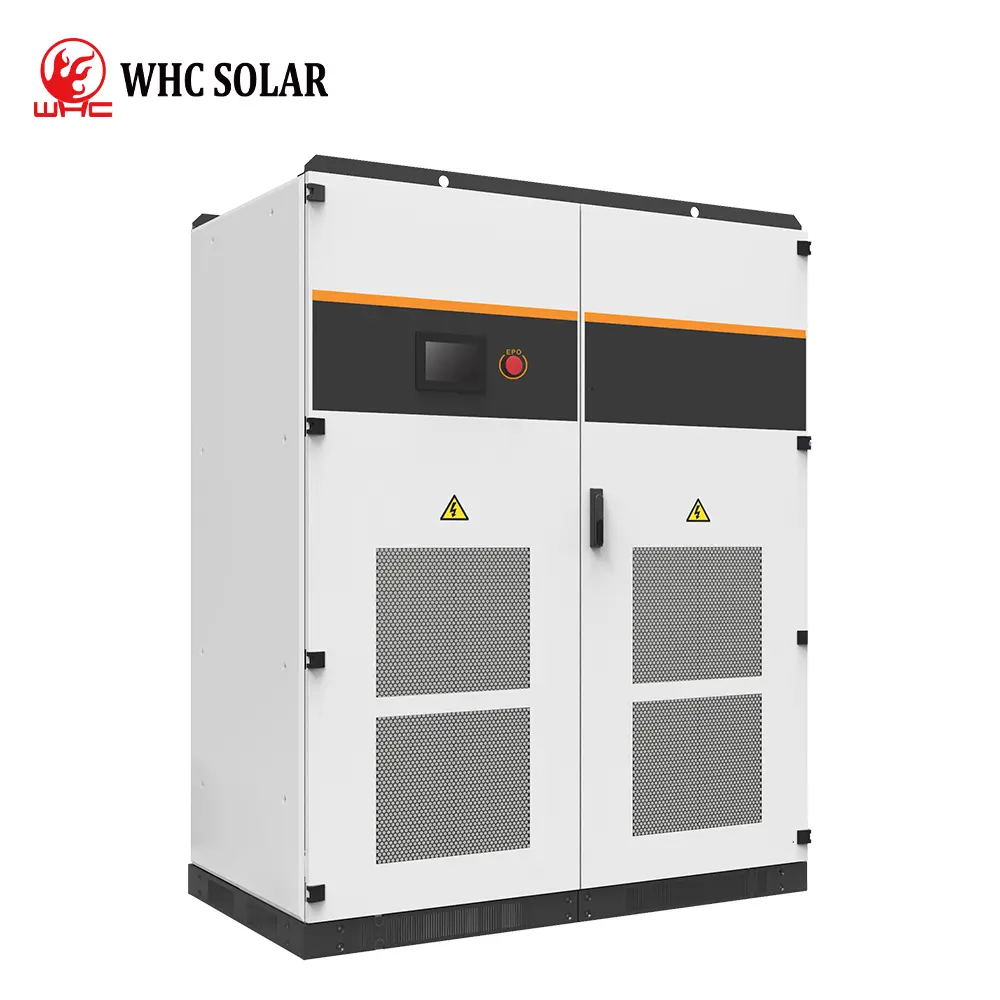
WHC Power Support for African Mine Projects
WHC Power is positioned as a solar commercial and industrial energy storage system specialist. For African mine projects, the project team can support configuration discussions around PV, battery storage, PCS or inverter selection, EMS logic and diesel hybrid operation.
Project contractors and mine owners can send load data, diesel generator information, site voltage, backup-hour target, available solar installation area and expected operation mode. WHC Power can then help prepare a project-oriented configuration rather than a generic product list.
Useful starting pages for procurement review include WHC Power C&I battery energy storage products, WHC Power project cases and the WHC Power contact page. Buyers can also review WHC Power factory and integration capability before supplier evaluation.
Conclusion
Commercial battery energy storage systems can help African mines reduce diesel dependence, improve backup power and build a more stable hybrid power system. For 200kW+ projects, the best result depends on correct load analysis, battery sizing, PCS selection, EMS control and generator coordination.
Before requesting a quotation, EPC contractors and mine owners should prepare peak load, critical-load list, backup-hour target, generator rating, daily operation schedule and expansion plan. A well-designed battery energy storage solution can support both operational reliability and long-term cost control for African mining sites.
Contact WHC Power to request a 200kW+ mine energy storage configuration.
FAQ
What size battery energy storage system is suitable for an African mine?
The suitable size depends on peak load, critical load, backup hours, diesel generator rating, solar capacity and expansion plan. For WHC Power content planning, this article focuses on 200kW+ C&I mine projects rather than residential systems.
Can battery storage fully replace diesel generators at a mine?
In many remote African mine projects, diesel remains part of the system for heavy loads or long low-solar periods. A solar + storage + diesel hybrid system is often used to reduce diesel runtime while keeping generator backup available.
Why is EMS important in mine energy storage?
The EMS controls when the battery charges, discharges and coordinates with solar PV and diesel generators. Good EMS logic helps reduce fuel use, protect critical loads and improve system stability.
What should EPC contractors provide before asking for a quotation?
They should provide load profile, peak demand, critical-load list, generator rating, site voltage, backup-hour requirement, installation environment, available PV area and expected project schedule.
Is this type of system suitable for projects above 200kW?
Yes. The topic is designed for 200kW+ commercial and industrial mine projects where load stability, diesel reduction, backup power and long-term operation are more important than a simple product price.


.svg)


